
Pattern grounded in delivery · CHAPTER 01
From fragmented finance, workforce and production data to one view of the business.
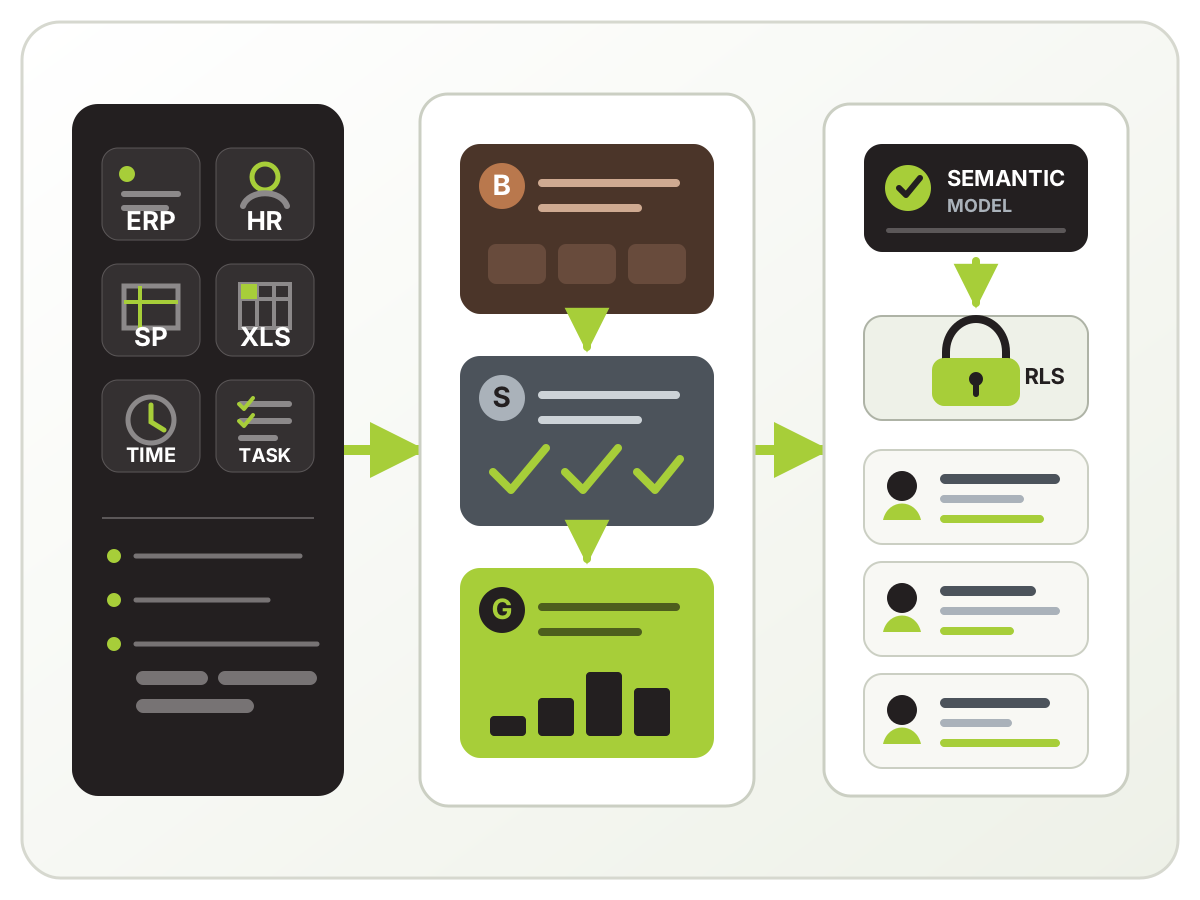
This cross-project pattern shows how ERP, HR, SharePoint, Excel, timesheets and task planning can become a governed data platform with financial reconciliation, RLS and role-specific reporting.
This cross-project example combines solutions delivered for several clients with similar needs. Organisation and engagement details have been generalised to show the repeatable architecture and delivery approach without disclosing client information.
Organisation and starting point
Why the existing reporting process falls short
A medium-sized project-based manufacturing group operates across several legal entities and plants. Finance runs in ERP, workforce data in HR, project registers and documents in SharePoint, and budgets, forecasts and allocation keys across multiple Excel files. Teams submit hours in a timesheet system and plan progress and capacity in a separate task management tool.
- Month-end reporting requires manual export consolidation, file version checks and repeated investigation of differences.
- Project cost, time, task progress and production execution are analysed separately, delaying a reliable view of margin.
- Project, cost centre, employee, product and period definitions differ between source systems.
- The board, project managers and accountants require different levels of detail and different access boundaries.
- There is no shared control register proving that a report agrees to the general ledger and approved operational data.
DELIVERY APPROACH
How the engagement moves from sources to decisions
-
01
Definitions and ownership
Business questions, KPIs, owners, systems of record and access rules.
-
02
Integration and quality
Data contracts, Bronze and Silver layers, testing and error handling.
-
03
Reconciliation and model
Financial controls, Gold layer, conformed dimensions and semantic model.
-
04
Security and reporting
RLS/OLS, role-based business testing and certified report publication.
-
05
Operations and handover
Monitoring, documentation, alerts, close procedures and knowledge transfer.
OUTCOME AND ACCEPTANCE
Acceptance criteria instead of invented percentages
- Every key KPI has a definition, owner, source and traceable calculation path.
- The finance report can be reconciled to ERP for a selected entity, account, period and document.
- Variances above tolerance are visible before publication and have an assigned owner.
- RLS tests confirm that a project manager, board member and accountant see only the intended data scope.
- The client team has the documentation, monitoring and procedures required to operate and evolve the solution.