Shared semantics
Explicit KPIs, dimensional models and DAX measures that reduce conflicting versions of the same information.

KPIs · SEMANTIC MODELS · REPORTING
We build and modernise Power BI solutions — from requirements, KPIs and semantic models to reports, security, performance and a controlled production operating process.
WHEN IT HELPS
SCOPE OF WORK
Requirements workshops, business questions, user groups and explicit KPI definitions.
Semantic models, dimensional modelling, DAX and Power Query/M.
RLS/OLS, roles, sharing and protection of data in reports.
Management and operational reporting with a clear information hierarchy.
Optimisation of models, queries, visuals and refresh processes.
Testing, documentation, version control and release across environments.
Support, usage monitoring and modernisation of existing solutions.
SOLUTION COMPONENTS
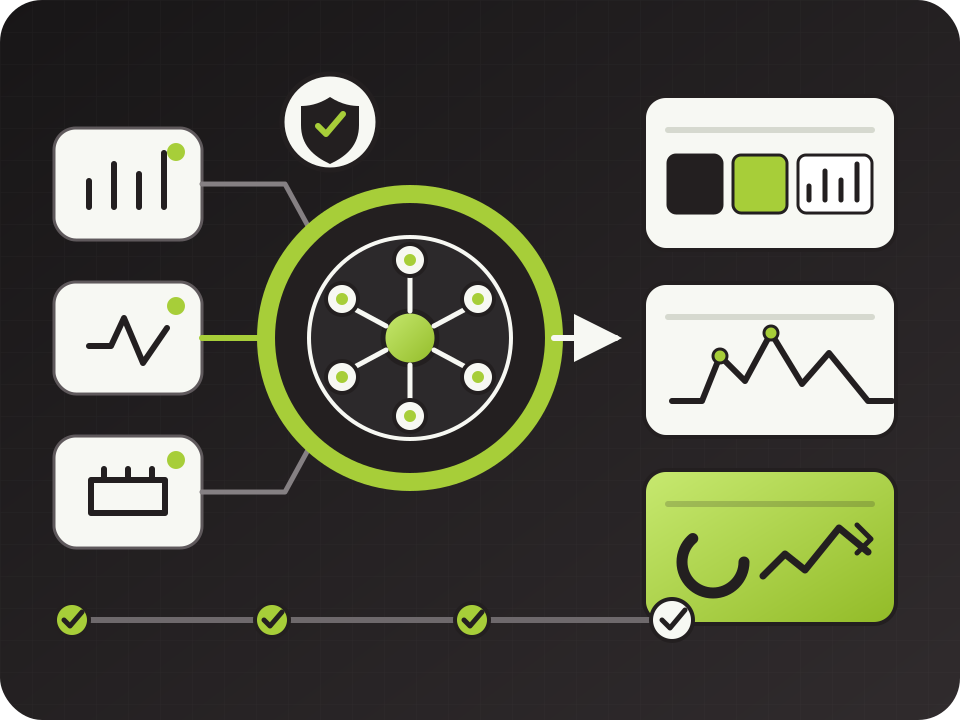
A strong Power BI solution combines shared semantics, the right level of detail and a process that allows reports to evolve safely.
Explicit KPIs, dimensional models and DAX measures that reduce conflicting versions of the same information.
Reports matched to business questions, decision frequency and the level of detail each audience requires.
Security, testing, deployment, monitoring and documentation that support controlled development.
OUTCOME
NEXT STEP
Describe the current state and expected outcome. The first step may be an assessment, an architecture review or a focused implementation.