Current-state view
One agreed picture of technology, data, processes, cost and accountability across business and IT.

ASSESSMENT · ARCHITECTURE · ACTION PLAN
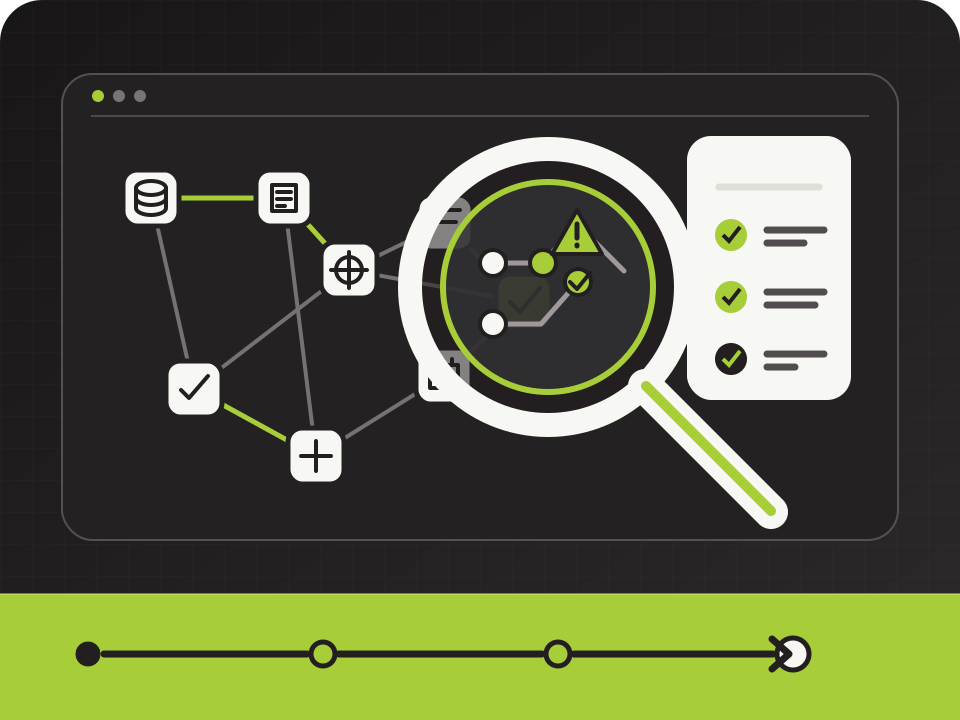
We connect business priorities, architecture and the way the team operates. An assessment of Power BI, Microsoft Fabric or a data warehouse results in explicit decisions, a target architecture and a realistic implementation plan.
WHEN IT HELPS
SCOPE OF WORK
Business and IT workshops covering goals, decisions, users and critical use cases.
A map of sources, flows, models, reports, integrations and responsibilities.
Assessment of quality, security, performance, cost, maintainability and team maturity.
Identification of duplication, bottlenecks, technical debt and operational risk.
Target architecture options with selection criteria and consequences.
A future governance, ownership and delivery operating model.
Priorities, dependencies, owners, risks and a phased action plan.
SOLUTION COMPONENTS
The assessment does not end with a list of issues. Every finding is connected to a decision, an owner and a next action.
One agreed picture of technology, data, processes, cost and accountability across business and IT.
A development scenario matched to business needs, skills, security requirements and practical constraints.
Phases, quick improvements, dependencies, risks and measures that move the work from recommendation to delivery.
AI DATA READINESS
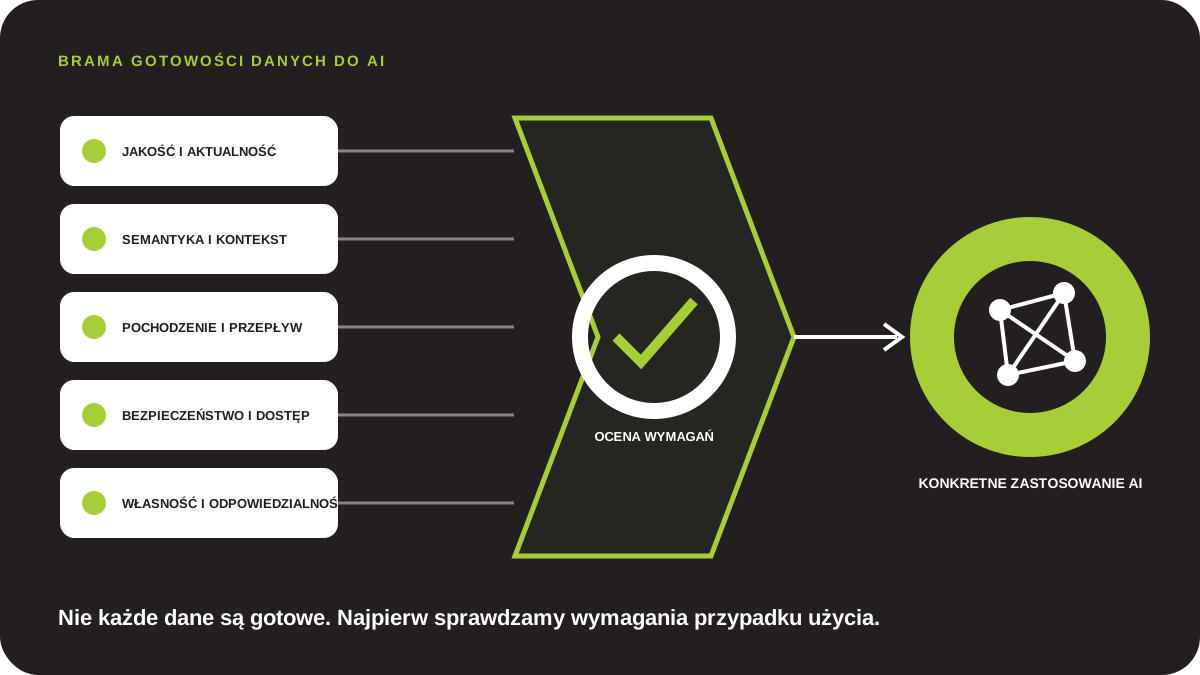
AI cannot repair inconsistent definitions, unknown data provenance or missing accountability. We assess quality, semantics, context, flows, access, security and ownership against specific AI use cases. The result is a gap map and a sequence for building the required foundations, rather than a generic claim of readiness.
OUTCOME
NEXT STEP
Describe the current state and expected outcome. The first step may be an assessment, an architecture review or a focused implementation.