
Guides · Power BI implementation planning
How to plan a Power BI implementation: scope, stages and cost drivers
A company decides to implement Power BI, and the conversation quickly turns to report counts, chart design and a launch date. The largest uncertainties often sit elsewhere: metric definitions, source quality and accountability for the result. A useful plan exposes these unknowns, limits the first release and makes it possible to compare proposals for the same work.
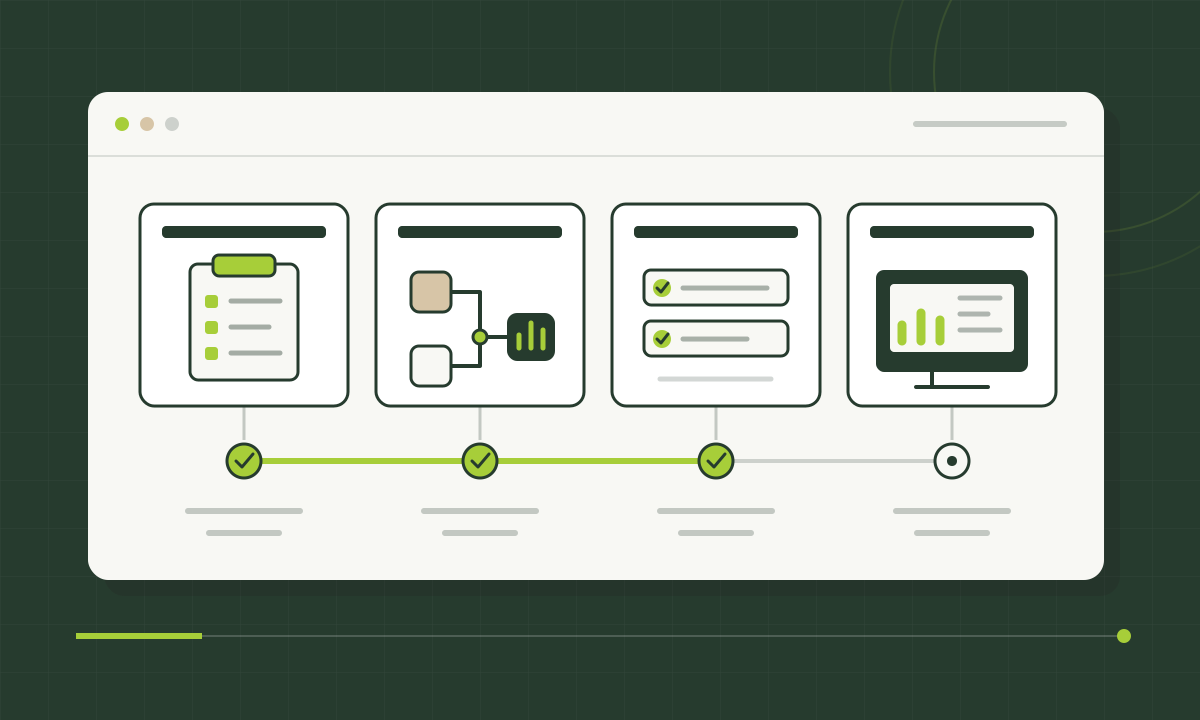
Start with a business decision and an accountable owner
Identify who will use the solution, the decision they need to make and the information they currently lack. Finance may need to explain a margin variance; a project manager may need to assess the cost of remaining work. The phrase management dashboard does not yet establish which data or actions are required.
For essential KPIs, agree the definition, unit, level of detail, recognition date and reference source. Name the person who will approve both the rule and its result. If finance and sales define revenue differently, resolving that difference belongs in the project rather than being treated as a visual defect. The business owner needs time for these decisions, not just an invitation to the final presentation.
Limit the first release and state what it excludes
Choose one process, an audience and a set of questions for which the complete path from source to decision can be tested. The initial release should produce a useful outcome, rather than an attractive screen backed by a manually prepared file. Also decide whether an experiment is needed to validate a risky technical assumption before committing to delivery.
Describe exclusions explicitly. Additional companies, longer history, planning, write-back to a source system or new sources may belong in a later phase. Assess a change through its effect on data, the model, testing and operations. Without that rule, an apparently minor request for another filter can quietly change the purpose of the whole implementation. Record the decision before changing the delivery baseline.
Verify data availability before approving the schedule
Inventory the ERP, databases, Excel files, SharePoint and other sources in scope. Record their owners, access methods, required history, loading frequency and known constraints. Identify dependencies on administrators and suppliers separately. A list of system names does not establish that the required data is accessible, complete or comparable across those systems.
Use a controlled sample to examine keys, duplicates, missing records, adjustments and period alignment. Agree how figures will reconcile to their reference and how exceptions will be handled. Where existing reporting already has problems, a review can help establish the target scope. That need not lead to rebuilding everything: its purpose is to reveal dependencies and uncertainties that materially affect the plan.
Plan shared definitions and real access scenarios
Agree which indicators should share definitions and who will maintain the semantic model. Design covers more than table relationships: it includes grain, date roles, measure rules and the required freshness of data. Use this foundation when deciding which report pages are needed and how consumers will navigate from a headline result to the information behind it.
Describe audience scenarios, such as finance viewing a whole company while project managers see only their projects. Within a Power BI workspace, RLS restricts data for Viewers, but not for Admin, Member or Contributor roles. Testing only as the author therefore cannot replace testing the consumer's experience. Export permissions and other routes to the data also require their own assessment against actual distribution methods.
Connect delivery stages to outputs and acceptance
The schedule should reflect dependencies: source access, KPI decisions, model review, user testing and release approval. Work can proceed iteratively, but each iteration needs an explicit goal and completion condition. Microsoft distinguishes planning, development, validation and deployment in its content lifecycle guidance. Translate that sequence into clear responsibilities for the engagement.
The table is an example of organising delivery, not a promised duration. For each stage, record the output, approver and evidence needed for acceptance. Demonstrating a working report alone does not establish that its data is correct or that somebody is ready to operate it. Review outstanding assumptions before committing to the next stage.
| Stage | Output | Acceptance evidence |
|---|---|---|
| Scope | Decisions, KPIs, sources, audiences and exclusions. | Approved scope and owners of key decisions. |
| Data and model | Repeatable loading, quality rules and measures. | Reconciled results for selected periods and cases. |
| Report and testing | Views, access roles and exception handling. | Recorded user-test results and decisions on defects. |
| Release | Deployment, operating instructions and accountability handover. | Verified post-release operation and an available support process. |
Plan tests of figures, permissions and working tasks
Prepare expected results with the business owner. Include an ordinary period, an adjustment, missing data and a case requiring restricted access. For each test, record the reference source, filters and acceptance condition. A difference from ERP may result from a different recognition date or scope, but it should be explained and approved rather than dismissed because the overall total looks plausible.
User acceptance should also test whether someone can complete a task: find the cause of a variance, recognise incomplete data and reach the required detail. Classify defects by their impact, not the order in which they arrive. Agree what blocks release, what needs explicit acceptance of a limitation and what can move to a later version with a named owner.
Include operations and adoption before launch
Agree version control, the release process and how development is separated from production. Plan post-deployment verification and a way to restore a previous version where needed. The right automation depends on the environment and permissions. Not every organisation needs the same collection of delivery tools from the outset; the selected approach still needs to be documented and repeatable.
Handover should identify an owner, loading dependencies, incident response, access rules and a support channel. Plan practical onboarding around the audience's tasks and assess how reports are used. Opening a report does not establish that decisions improved. Collect questions, misinterpretations and recurring Excel exports as well, so that the next changes address an observed problem rather than simply adding more visualisations.
Separate delivery cost from licensing and ongoing support
Effort depends on source count and quality, historical scope, KPI complexity, access requirements, refresh expectations, testing and documentation. The availability of people who answer questions and approve results matters too. Two proposals for five report pages can include very different levels of integration work, validation and ongoing accountability. Ask what each proposal assumes, excludes and requires from your team.
Budget separately for delivery, subscriptions and infrastructure, and subsequent support. Creator and consumer licensing must match the distribution model and environment. Check current terms before buying. A Power BI implementation does not automatically require adopting the whole Fabric platform. Establish why a shared data layer is needed first, then compare architecture options, cost and operating requirements for that specific use case.
Prepare a short brief that makes proposals comparable
For an initial conversation, describe the process, problem, audiences and sources, together with the most important business questions. Add current constraints, the intended result and any deadline driven by a business need. Do not submit personal data, passwords or confidential files through a public form. A suitable way to access supporting material should be agreed separately.
Ask the supplier to separate confirmed scope from assumptions and open questions. The proposal should identify stage outputs, acceptance rules, responsibilities on both sides and how scope changes will be priced. For an existing environment, use an audit checklist to record findings, evidence, priorities and actions. It provides a basis for deciding what to retain, what to improve and what to extend after those decisions are made.
Brief before estimating a Power BI implementation
- The process, decisions, audiences and accountable business owner.
- Essential KPIs, their definitions and reference sources.
- The first-release scope and an explicit list of exclusions.
- Sources, data availability, history and freshness expectations.
- Consumer roles and required access restrictions.
- Test cases, expected results and named approvers.
- Release, operations, support and knowledge-handover arrangements.
- Licensing assumptions, client responsibilities and scope-change rules.
Keep the checklist by printing this guide to PDF from your browser.
Downloads
Power BI audit checklist for Excel
28 review items, assessments, evidence, priorities, actions, owners and due dates. Editable XLSX file without macros. No email is required to download it; the completed file stays with you.
Questions and answers
How much does a Power BI implementation cost?
Chart counts do not provide a universal price. First define sources, data quality, KPIs, audiences, security and acceptance criteria. That scope makes it possible to compare delivery, licensing and ongoing support costs.
How long does a Power BI implementation take?
The schedule depends on scope and dependencies, including data access and the availability of people who approve definitions and results. Plan stages with outputs and acceptance conditions rather than promising a single date before reviewing the environment.
Is an audit required before implementation?
A full audit is not always necessary. Where existing models, discrepancies or unclear dependencies are involved, an agreed review reduces uncertainty. In a new project, requirements analysis and source verification may serve that purpose.